


Sports DPR & Financial Feasibility Consultant
Sports DPR & Financial Feasibility Consultant services from Olympiados help project owners evaluate project scale, capital requirements, financial viability, and development risks before committing capital. As independent sports infrastructure consultants, we provide decision-focused DPR and financial feasibility advisory across the project lifecycle.Explore our full suite of sports consulting services.

What a Sports DPR & Financial Feasibility Consultant Should Deliver
A DPR is not a document—it is a decision filter.
At Olympiados, we prepare owner-side DPRs that test:
- Whether the project should exist at all
- What scale is financially viable
- What utilisation assumptions are realistic
- Whether projected returns are achievable
Our Sports Infrastructure Feasibility Consultant services establish the strategic foundation before the DPR process, helping project owners validate demand, project viability, and development priorities.
- Decision-grade inputs before capital commitment
- Independent, owner side- evaluation
- Reduced financial and delivery risk
Scope of Sports DPR & Financial Feasibility Consultant
Project concept validation & scope definition
Define whether the proposed idea is viable and aligned with market realities
Site and land-use assessment
Evaluate constraints, access, and suitability for intended usage
Capacity planning & sport mix optimisation
Determine the right combination of facilities based on demand
Capital cost estimation (CAPEX benchmarking)
Align budget with realistic construction and infrastructure costs
Phasing strategy and development roadmap
Avoid overbuilding in Phase 1
Risk identification and mitigation framework
Identify financial, operational, and execution risks early
Financial Feasibility is Where Projects Are Won or Lost
Most DPRs fail—not because of bad intent, but because they ignore what actually happens during execution.
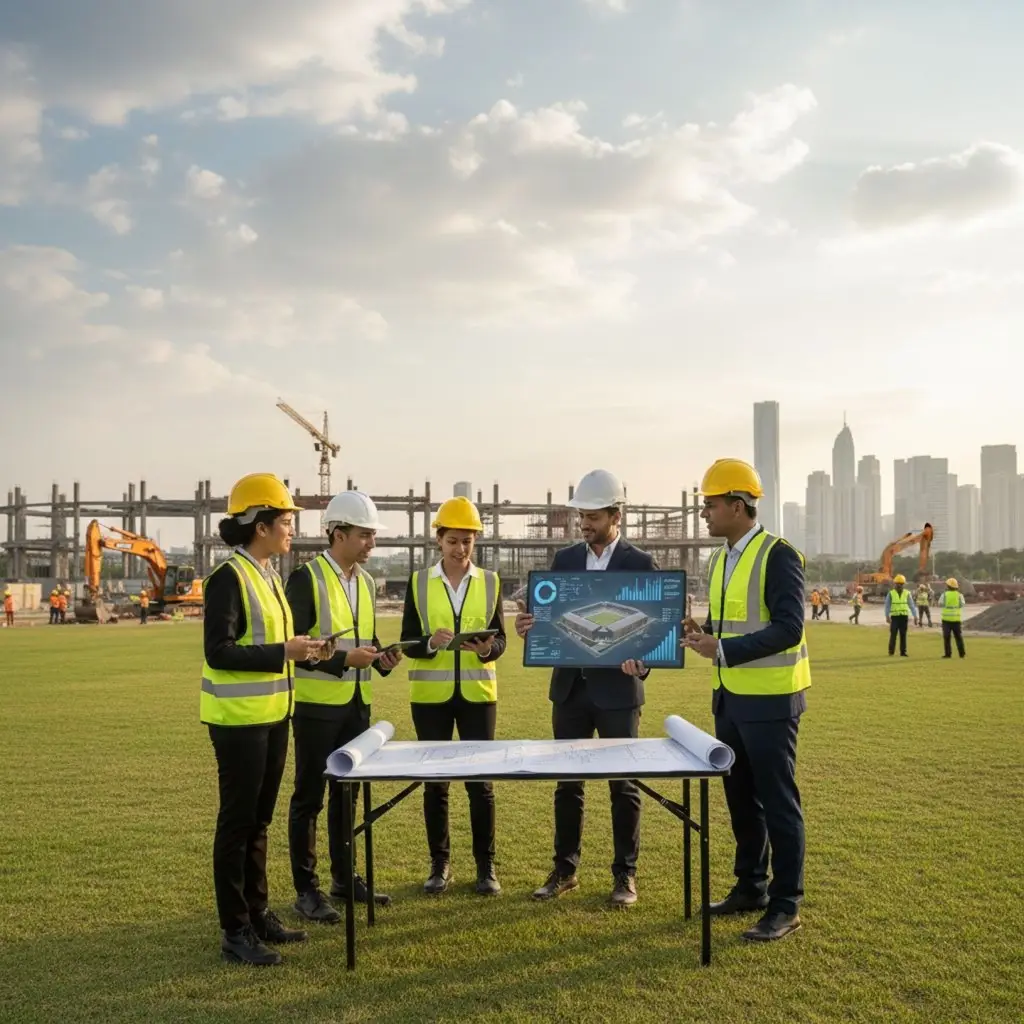
At Olympiados, our feasibility analysis is grounded in real project construction experience, not assumptions built in isolation.
We have seen how:
* Costs escalate beyond initial estimates once design meets site realities
* Utilisation assumptions often fail under actual operations
* Design decisions directly impact long-term revenue performance
* Operational inefficiencies quietly erode profitability
This allows us to stress-test financial models against actual project behaviour—not just spreadsheet logic.
We’ve built these projects—not just modelled them.
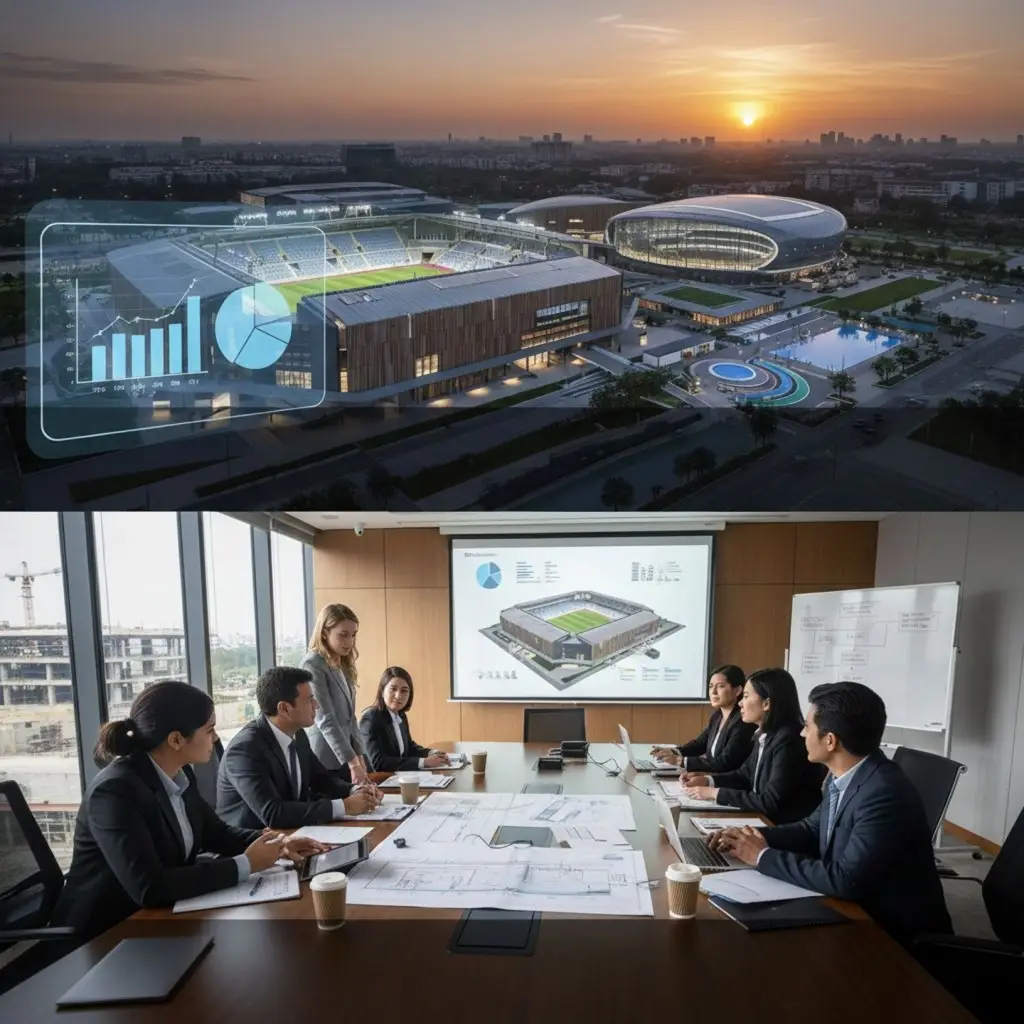
Market & Demand Assessment
How can we help you?
Contact us at the Consulting business inquiry online.
What Do We Do
- Revenue potential & utilization modelling
- Operating cost assessment (OPEX)
- Cash flow projections and breakeven analysis
- Sensitivity and downside risk testing
- Funding structure and investment readiness
- Go / No-Go recommendations
Independent Advisory. No Execution Bias.
We operate strictly as an advisory firm.
We do not undertake EPC, construction execution, or turnkey delivery.
This ensures our recommendations are completely independent—focused only on what is right for your project, not what is profitable for us to build.
In sports infrastructure, this distinction matters. Most DPRs are influenced by execution interests. Ours are not.
Who This Advisory is For
Typical Outcomes
This is for decision-makers who are committing significant capital into sports infrastructure—and want clarity before they build.
- Developers and landowners evaluating feasibility before execution
- Investors and funds assessing long-term viability of sports assets
- Institutions and public bodies planning large-scale facilities
- Promoters who want independent validation—not contractor-driven advice
What changes when feasibility is grounded in real execution—not assumptions.
- Clear go / no-go decision before capital deployment
- DPRs aligned with funding, approvals, and real execution constraints
- Financial models grounded in actual cost and utilisation behaviour
- Reduced risk during construction and operations
- Stronger negotiating position with contractors and vendors
How Sports DPR & Financial Feasibility Consultant Supports Project Decisions
This advisory is positioned at the most critical stage of any project—before capital is committed and before execution locks in decisions. Olympiados ensures that assumptions are not just technically correct, but practically achievable. By aligning feasibility, cost, design, and operational realities upfront, it prevents costly revisions during execution and gives owners a stronger, more informed position when engaging contractors, consultants, and investors. The result is clarity before commitment—not correction after it.
Discuss DPR Readiness
Land status, approvals, scope clarity, and ministry expectations