PPP Sports Projects: Building Sustainable Public Sports Assets




The Current PPP Landscape in Sports
Across regions, public authorities are turning to PPP models to address how sports infrastructure is planned, delivered, and sustained.
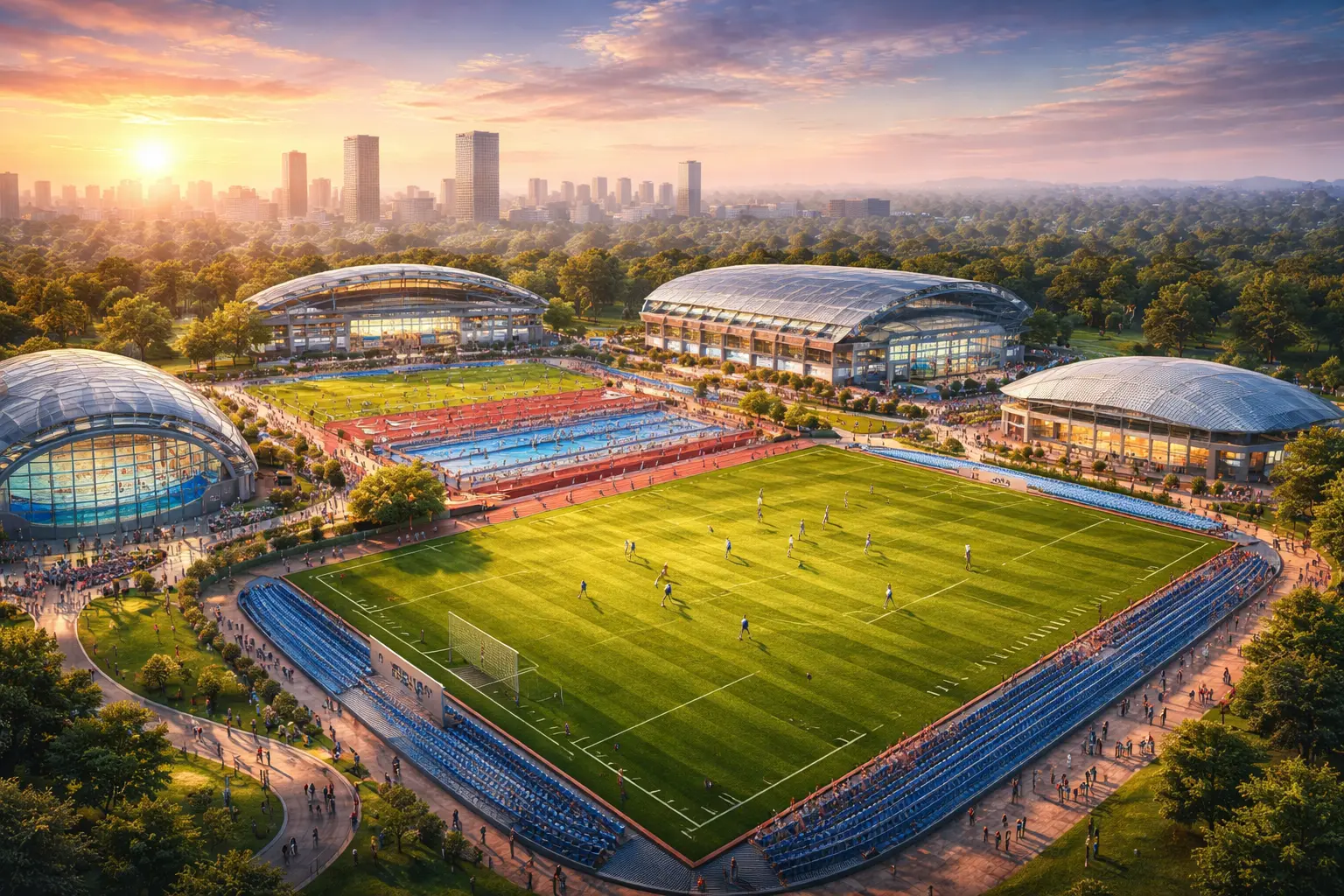
Public authorities are increasingly using PPP models to expand sports infrastructure at scale while improving the utilisation of both existing and new assets. The intent is to bring in private participation and operational capability so that facilities are not only built, but actively managed, programmed, and sustained. The underlying objective is to ensure that sports assets remain functional and relevant long after inauguration, rather than becoming underutilised public structures. This shift reflects an important realisation: the challenge in sports infrastructure is no longer construction alone, but sustained use, performance, and day-to-day operation. While PPP frameworks provide a necessary structure to address this, they do not guarantee success on their own. Outcomes ultimately depend on how projects are framed before they are tendered and how sport-specific decisions are handled after they are awarded.
Why Many PPP Sports Projects Struggle
Most PPP sports projects that fail do not fail because of contracts or financing.
They fail because of early-stage assumptions.
Where Olympiados Makes the Difference
Olympiados works within the PPP ecosystem as a sport-domain advisory layer, focused on decision stages where outcomes are defined.
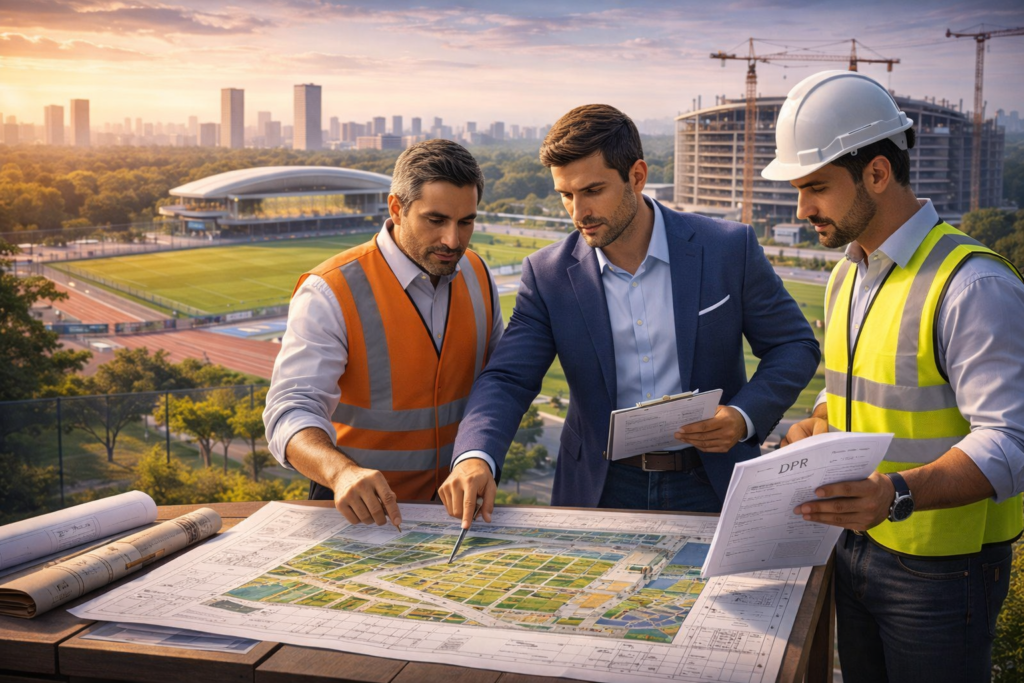
Our role is not to replace financial advisors, architects, engineers, or contractors, each of whom plays a defined and necessary function within a PPP structure. Instead, Olympiados ensures that sport itself is defined, tested, and protected as a technical discipline, rather than treated as an assumption that can be adjusted later through operations or management. In practice, this means translating sporting intent into decisions that are measurable and defensible — whether that is validating whether a site can realistically support the intended sports, stress-testing usage assumptions before they enter a DPR, or ensuring that design and engineering choices align with how the facility will actually be used on a daily basis. By intervening at this stage, risks are surfaced early, when they are still manageable and inexpensive to correct. This advisory approach aligns closely with the direction of current PPP initiatives in sports, which increasingly recognise that early sport decisions determine long-term success far more than contractual structure alone. When sport intelligence is embedded early, both public authorities and concessionaires are better positioned to make informed choices, reduce downstream conflict, and deliver facilities that remain viable, usable, and relevant over time.
Support to Public Authorities (Pre- DPR/Pre- Tender)

Support To Concessionaires (Post- Award)
Why This Dual Role Matters
PPP sports projects sit at the intersection of public intent and private execution.
Governments seek long-term public value.
Concessionaires seek operational viability.
Both depend on the same thing:
sport decisions being right from the start.
Olympiados supports this alignment by bringing sport-domain intelligence into the process — early, practically, and without conflict.

Conclusion: Making PPP Sports Projects Work
In simple terms, PPP sports projects fail when sport is treated as an assumption—something that can be adjusted later through operations, management, or contracts.
They succeed when sport is clearly defined before land is locked, designs are finalised, and risks are transferred.
This distinction is subtle, but decisive.
Olympiados exists to ensure that sport is treated as a discipline at the right moment—when decisions are still flexible, risks are still manageable, and outcomes can still be shaped. By embedding sport-domain intelligence early and practically, we help PPP sports projects move beyond intent and infrastructure, toward facilities that perform, endure, and deliver real public value.
Because in PPP sports projects, what is decided first determines what succeeds last.
Start with the Right Decisions
PPP sports projects succeed or fail long before construction begins.
We work with public authorities and concessionaires at the stage where outcomes are still shapeable.