

Sports Facility Feasibility Study & Design Repositioning
From an unstructured sports facility concept to a viable and commercially sustainable sports business model, this case study demonstrates how Olympiados approached a complex sports development through strategic feasibility assessment, market analysis, facility planning and ROI evaluation. The project began with an initial concept that lacked clarity on market demand, facility mix, investment requirements and long-term operational viability.
Through a structured sports facility feasibility study, we evaluated the local market, assessed demand for different sports and activities, reviewed the proposed development strategy and identified opportunities to improve the commercial potential of the facility. The study ultimately helped reposition the concept into a more practical, scalable and financially sustainable sports facility model, providing the client with a clearer basis for investment, planning and future development.
Sports facility feasibility study, strategic planning and ROI analysis.
When a client approached us with a proposed sports complex in West Bengal, the project was at a critical stage of uncertainty. The concept had been developed from a design perspective, but there were fundamental questions about whether the proposed sports facility was commercially viable, whether the local market could support the planned mix of facilities, and whether the investment could generate sustainable returns. Before moving further into design and development, we recommended a sports facility feasibility study to test the concept against actual market demand, investment requirements, operating potential, and long-term financial viability.
Before design development, we identified the need for a strategic feasibility assessment to determine:
- whether the facility should exist in its current form,
- which sports had sustainable demand,
- the appropriate investment scale,
- and the most viable long-term operating model.
The original concept was commercially unsustainable and hence we did a detailed feasibility study with ground realities by visiting similar facilities and mapping the usage and demand analysis.
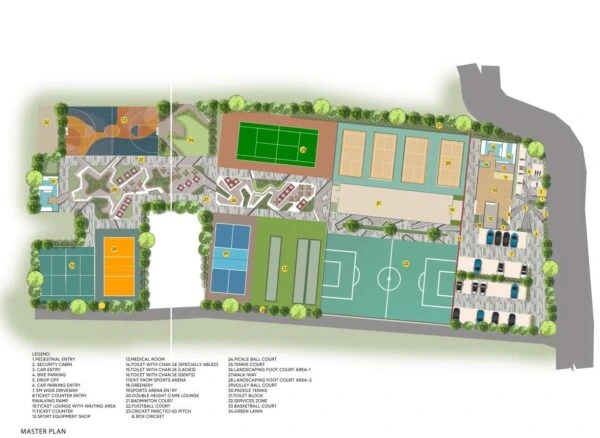
Our assessment identified a major disconnect between the proposed infrastructure mix and actual local demand patterns.
While the region showed potential for a sports-driven business, the original concept carried significant sustainability risks in its existing form.
The project was strategically restructured around:
- scalable development,
- academy-led recurring revenue,
- demographic suitability,
- and affordable participation models aligned with local spending behavior.
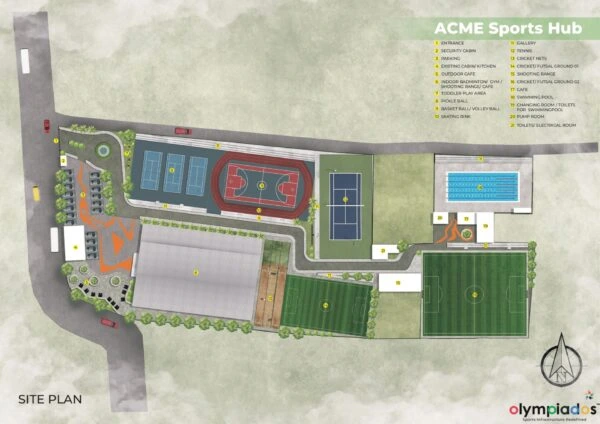
How Our Approach Transformed The Sports Facility
Our role extended beyond design support into strategic sports infrastructure advisory focused on viability, scalability, and long-term operational sustainability.
Strategic Planning
- demand analysis
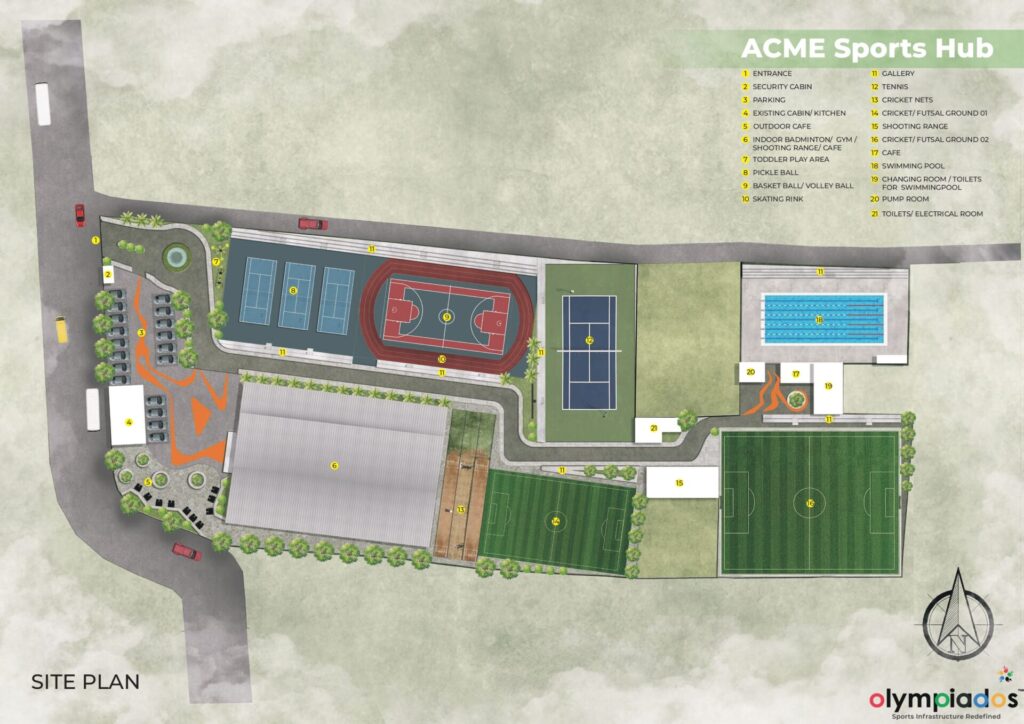
- zoning
- scalability
- phased development
Technical Planning
- federation standards
- BOQ
- material recommendations
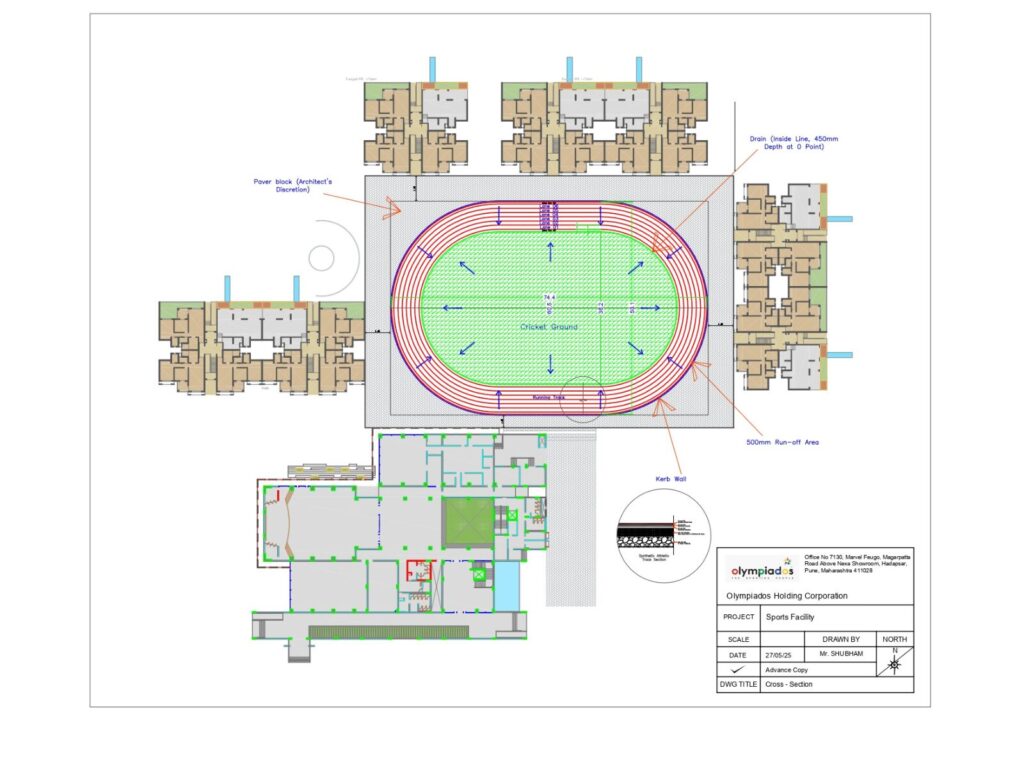
- infrastructure planning
Building a Financially Sustainable Sports Facility Model
Identification of revenue streams:
- Memberships, pay & play, coaching programs, events, sponsorships
- Ancillary income: food courts, retail, rentals, parking,
- Market benchmarking and pricing strategy
- Financial feasibility:
- CapEx OpEx projections
- Break-even analysis
- Cash flow forecasts (3–5 years)ROI calculations and investor pitch highlights
Strategic Outcome of Sports Facility Feasibility Study
• Converted an unsustainable concept into a scalable business model
• Identified academy-based recurring revenue opportunities
• Reduced investment-risk exposure through phased planning
• Improved long-term operational feasibility
• Created investor-ready conceptual direction
Conclusion: From Concept to a Viable Sports Business
The key outcome of this sports facility feasibility study was not simply a revised design, but a clearer and more commercially sustainable direction for the project. By evaluating demand, facility mix, investment requirements, revenue opportunities and operational considerations together, the project could be repositioned around realistic market conditions rather than assumptions. This approach demonstrates why feasibility should precede detailed design and capital commitment in sports infrastructure projects.
A well-structured feasibility study can identify risks early, improve investment decisions and create a stronger foundation for subsequent planning and technical development. For developers, investors and institutions considering a new sports facility, the objective should be to understand what should be built, at what scale, for whom, and under what operating model before the project moves into execution.
Explore how structured advisory can help identify, validate, and control these decisions early.
If you are evaluating a sports infrastructure project, the most critical risks are often locked in before execution begins.