

Football Pitch Size: Full Size, Futsal and Small Size Formats
Football pitch size is one of the first considerations when planning a football facility. While a full-size football pitch is governed by the Laws of the Game, smaller formats such as futsal and small-sided football offer greater flexibility where land availability is limited.
In urban areas, football facilities are increasingly being adapted to suit constrained sites, changing user preferences and rising land values. Instead of developing only traditional full-size pitches, owners and developers are increasingly evaluating formats such as 5-a-side, 7-a-side, 9-a-side and futsal. These formats can make more efficient use of available land while supporting recreational, academy, community and commercial applications.
The evolution of football facilities is also being influenced by changes in how the game is played and consumed. Natural grass is no longer the only surface option for football facilities, with synthetic turf widely used for high-utilisation recreational and commercial facilities. Perimeter fencing, ball-stop netting and floodlighting also allow compact facilities to operate safely and efficiently for extended hours, particularly in urban environments where evening and after-work usage can be an important part of the operating model.
From a sports infrastructure planning perspective, the question is therefore not simply how large a football pitch should be. The more important question is which pitch format and facility configuration are appropriate for the available land, intended users, level of play and commercial objectives. Getting these decisions right at the early planning stage can have a direct impact on land efficiency, capital cost, operational performance and long-term commercial viability.
What Is the Standard Football Pitch Size?
Under Law 1 of the Laws of the Game, a football pitch must be rectangular, with the touchline longer than the goal line.
The permitted dimensions for the field of play are:
- Length (touchline): 90–120 metres
- Width (goal line): 45–90 metres
For international matches, the permitted dimensions are narrower:
- Length: 100–110 metres
- Width: 64–75 metres
FIFA also recommends 105 m × 68 m as its field-of-play dimension for stadium planning. (IFAB)
Therefore, there is no single football pitch size that applies to every facility. The appropriate dimensions depend on the level and purpose of the facility, competition regulations, available land and operational requirements.
Football Pitch Dimensions and Key Markings
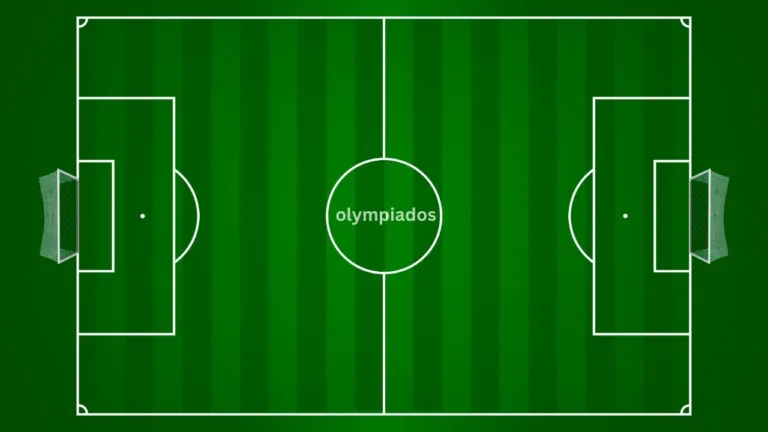
The dimensions of the playing field are only one part of football pitch planning. The pitch also contains defined areas and markings that must comply with the applicable Laws of the Game.
Important dimensions include:
> Centre circle radius: 9.15 metres
> Penalty mark: 11 metres from the goal line
> Goal area: extends 5.5 metres into the field of play
> Penalty area: extends 16.5 metres into the field of play
> Corner arc radius: 1 metre
> Goal width: 7.32 metres
> Goal height: 2.44 metres
The penalty area is formed by lines extending 16.5 metres from the inside of each goalpost and 16.5 metres into the field of play. The goal area is similarly formed using 5.5-metre dimensions.
These measurements should not be confused with futsal dimensions, which follow a separate set of laws.
Futsal Pitch Size
Futsal is a different format of the game and has substantially smaller pitch dimensions.
For non-international futsal matches, the Laws provide:
- Length: 25–42 metres
- Width: 16–25 metres
For international futsal matches, the dimensions are:
- Length: 38–42 metres
- Width: 20–25 metres
This distinction is important when planning an urban sports facility. A futsal court should not simply be treated as a reduced football pitch. It is a distinct playing format with its own dimensions, markings, goals, playing surface and operational requirements.
FIFA also has a dedicated quality programme for futsal playing surfaces, reflecting the specific performance requirements of the sport.
Small-Sided Football Pitch Size
Small-sided football includes formats such as 5-a-side, 7-a-side and 9-a-side football.
Unlike the full-size game, there is no single universal pitch dimension that should automatically be applied to every recreational small-sided facility. Dimensions can vary according to competition regulations, age group, format and intended use.
For commercial and community facilities, the pitch is therefore normally designed around:
> available land
> player age and skill level
> intended format
> expected number of players
> safety run-off requirements
> fencing and ball-stop systems
> lighting
> spectator requirements
> circulation
> operating model
This is particularly important in cities, where land availability can be the primary constraint.
Football Pitch Size in Urban Areas
Urban football facilities increasingly operate within constrained sites. A developer may have a podium, rooftop, institutional campus, commercial plot or residual land parcel that cannot accommodate a full-size football field.
In such situations, the objective should not be to force a full-size pitch into an unsuitable site.
Instead, the facility should be evaluated according to the available footprint and intended use.
Depending on the site, the appropriate solution could be:
> a full-size football pitch
> a 9-a-side pitch
> a 7-a-side pitch
> a 5-a-side pitch
> a futsal facility
> multiple smaller pitches
> a multi-use sports surface
The playing area itself is only one component of the facility. A viable layout must also consider the space required around the pitch for safety, access, fencing, lighting infrastructure, player movement and supporting facilities.
How Much Land Is Required for a Football Facility?
A common mistake in early-stage planning is to equate the playing-field dimensions with the total land requirement.
For example, a 105 m × 68 m field of play represents approximately 7,140 square metres. However, a complete football facility requires additional space beyond the field of play.
Depending on the facility type and level, the overall site may need to accommodate:
- safety and run-off areas
- player and team access
- technical areas
- spectator circulation
- changing rooms
- reception and administration
- toilets
- equipment storage
- maintenance areas
- parking and drop-off
- electrical and MEP infrastructure
- drainage and stormwater management
FIFA’s stadium guidance also distinguishes between the field of play and the wider pitch area surrounding it, recognising that additional space is required around the playing surface.
Consequently, land feasibility should be assessed using the complete facility footprint, rather than the pitch dimensions alone.
Does a Small Football Pitch Need FIFA Certification?
Another common question during facility planning is whether a small-sided football pitch needs to use a FIFA-certified turf system.
There is an important distinction between meeting the Laws of the Game, surface performance requirements, and FIFA Quality certification.
A commercial or community football facility does not automatically require a FIFA-certified football turf simply because it is used for football.
The appropriate specification depends on the intended level of play, competition requirements, user profile, intensity of use, climate, maintenance capability and lifecycle cost.
For a professional or competition facility, higher performance requirements may be appropriate. For a recreational commercial facility, a technically well-specified surface with appropriate durability, installation quality, maintenance support and warranty provisions may provide a more commercially rational solution.
The correct approach is therefore to specify the surface according to actual operational requirements, rather than selecting a certification simply because it appears to represent a higher specification.
Futsal Pitch Size
The ideal football pitch size is ultimately a planning decision.
A larger pitch provides a playing experience closer to the traditional 11-a-side game, but it also requires significantly more land and increases the cost of construction, lighting, drainage, maintenance and supporting infrastructure.
Smaller formats provide greater flexibility and can allow developers to create high-utilisation facilities in locations where a full-size football pitch is impractical.
The decision should therefore consider five primary factors:
1. Land Availability
The first question is how much usable land is actually available after accounting for setbacks, access, structures, circulation and other site constraints.
2. Intended Users
A school, professional academy, residential development, commercial sports centre and community facility may require completely different pitch configurations.
3. Playing Format
The intended format—11-a-side, 9-a-side, 7-a-side, 5-a-side or futsal—directly influences the required playing dimensions and supporting infrastructure.
4. Utilisation
For commercially operated facilities, the pitch should be evaluated against expected booking frequency, operating hours, peak demand and maintenance requirements.
A smaller facility with high utilisation can potentially be more commercially effective than a larger facility with poor utilisation.
5. Capital and Lifecycle Cost
Pitch construction is only the initial investment. Lighting, turf replacement, drainage, irrigation where applicable, maintenance, fencing and equipment all contribute to lifecycle cost.
The right pitch specification is therefore the one that balances performance, safety, durability, land efficiency and commercial viability.
Football Pitch Planning: Beyond Dimensions
A successful football facility is not created by selecting a pitch dimension from a standard table.
The pitch must be integrated into the wider facility plan.
For example, a small-sided football facility may require careful coordination of:
- pitch orientation
- access and circulation
- spectator viewing
- fencing
- ball-stop netting
- floodlighting
- drainage
- player facilities
- reception and waiting areas
- changing rooms
- toilets
- equipment storage
- emergency access
- maintenance access
The surrounding environment can also influence the design. Urban facilities may have neighbouring residential buildings, traffic, noise restrictions, limited parking or podium structural constraints.
These factors can materially change the feasibility of a proposed football facility.
Conclusion
Football pitch size is not simply a question of choosing the largest possible playing area.
For a conventional 11-a-side football facility, the Laws of the Game permit a broad range of dimensions, while international matches operate within a more defined range. FIFA’s stadium guidance uses 105 m × 68 m as a recommended field-of-play dimension for stadium planning.
Futsal and small-sided football provide alternative formats where land availability, urban conditions or commercial objectives make a full-size football field impractical.
For developers and owners, the more important question is therefore:
What football format provides the best balance between available land, intended use, player experience, operational requirements and commercial viability?
That decision should ideally be made before committing to detailed design or construction.
At Olympiados, our sports infrastructure advisory approach evaluates football and small-sided sports facilities from a planning, technical and commercial perspective—helping owners determine the appropriate facility format before significant execution commitments are made.
A common decision point in small-sided football projects is whether a FIFA-certified turf system is required.
From an advisory standpoint, this is typically not a default requirement for most commercial or community-level facilities. The decision should instead be based on intended usage, target user segment, and lifecycle cost considerations.
In many cases, selecting a well-specified turf system with appropriate durability, warranty support, and installation quality delivers better long-term value than opting for higher-cost certified systems without a clear operational need.
The focus should remain on aligning surface performance with actual usage requirements rather than over-specifying based on perception.
From a viability standpoint, futsal formats offer a compact, high-utilization model that aligns well with urban land economics. When structured correctly, they enable strong engagement with efficient capital deployment.
If you are evaluating a futsal or small-sided football project, early-stage clarity on sizing, layout, and cost structure is critical.
Explore how our advisory approach supports decision-making before execution commitments are made.