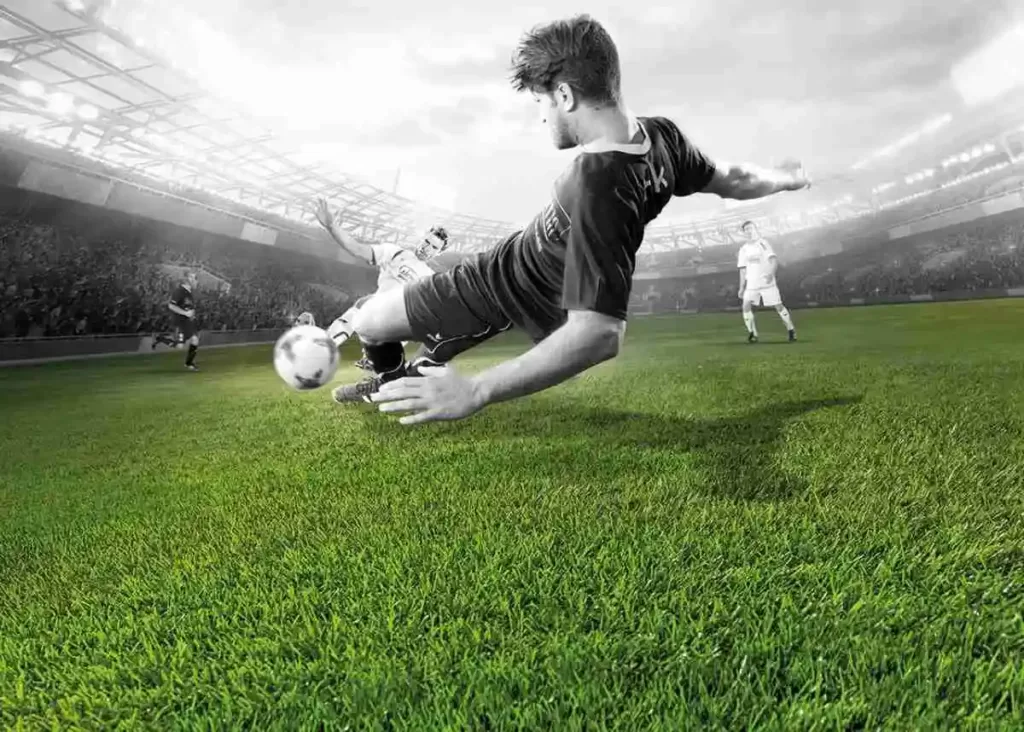
Selecting Football Grass vs Natural Grass is one of the key decisions in football facility development is the selection and specification of the playing surface,
In many project scenarios, artificial turf systems are considered as an alternative to natural grass due to their durability, lower maintenance requirements, and suitability for high-usage environments.
Football Turf: Benefits
From a project planning perspective, artificial turf systems offer several operational and financial advantages:
- Durability:Designed to withstand high-frequency usage with minimal surface degradation
- Playability:Provides consistent playing conditions across varying usage levels
- Safety:Engineered to meet impact and player safety requirements when properly specified
- Low Maintenance:Reduces ongoing maintenance intensity compared to natural grass systems
- Year-Round Use:Enables higher utilization irrespective of weather variability
From a planning standpoint, site preparation is a critical determinant of long-term surface performance. Factors such as sub-base stability, drainage design, and grading directly impact durability and lifecycle cost. The most raised question we often counter is whether one need a FIFA certified football grass. However it all depends upon the usage, area, life cycle, comfort, willingness to pay extra.
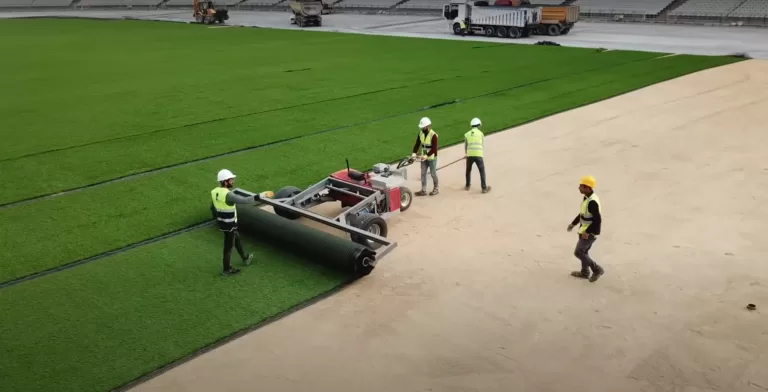
Preparation of the Football field and choosing the Football Turf
While artificial turf installation follows a structured execution process, from an owner’s perspective, the focus should be on ensuring that each stage meets required specifications and quality benchmarks.
Key stages typically include:
* Base preparation (quality + drainage)
* Shock absorption layer (player safety + performance)
* Turf installation (alignment + seam integrity)
* Infill application (stability + playability)
* Surface finishing (markings + detailing)
Maintenance Tips for Football Turf:
Maintenance planning is essential to preserve surface performance and extend lifecycle value.
- Regular brushing to maintain the turf’s upright position and even distribution of infill.
- Periodic grooming to prevent compaction and improve player traction.
- Prompt removal of debris and organic matter to prevent turf deterioration.
If you are evaluating artificial turf as part of a sports facility project, early-stage decisions around surface selection, specification, and lifecycle cost have a significant impact on long-term outcomes.
Explore how our advisory approach supports structured decision-making before execution commitments are made.