
Choosing the right tennis court flooring in India is not just a technical decision — it directly impacts cost, durability, player safety, and long-term maintenance.
Whether you are planning a school facility, sports academy, or private court, selecting the right surface depends on usage, climate, and budget. This guide breaks down the key flooring options and helps you make the right decision.
Types of Tennis Court Flooring
There are 4 types of tennis court flooring. However, it depends on various requirements. Here is a beginner’s guide to Tennis Court Flooring:
Grass Court Flooring
Grass courts are natural surfaces offering a fast game with low bounce. While they provide a premium playing experience, they are rarely practical in India due to high maintenance requirements and sensitivity to weather conditions.
Best suited for: Premium clubs with dedicated maintenance teams
Not recommended for: Schools, academies, or high-usage facilities
Clay Court Flooring
Clay courts offer slower gameplay and higher bounce, making them ideal for training and endurance development. Construction cost is relatively lower, but maintenance is continuous and labour-intensive.
Best suited for: Training academies
Key concern: Daily maintenance and water management
Hard Court Flooring
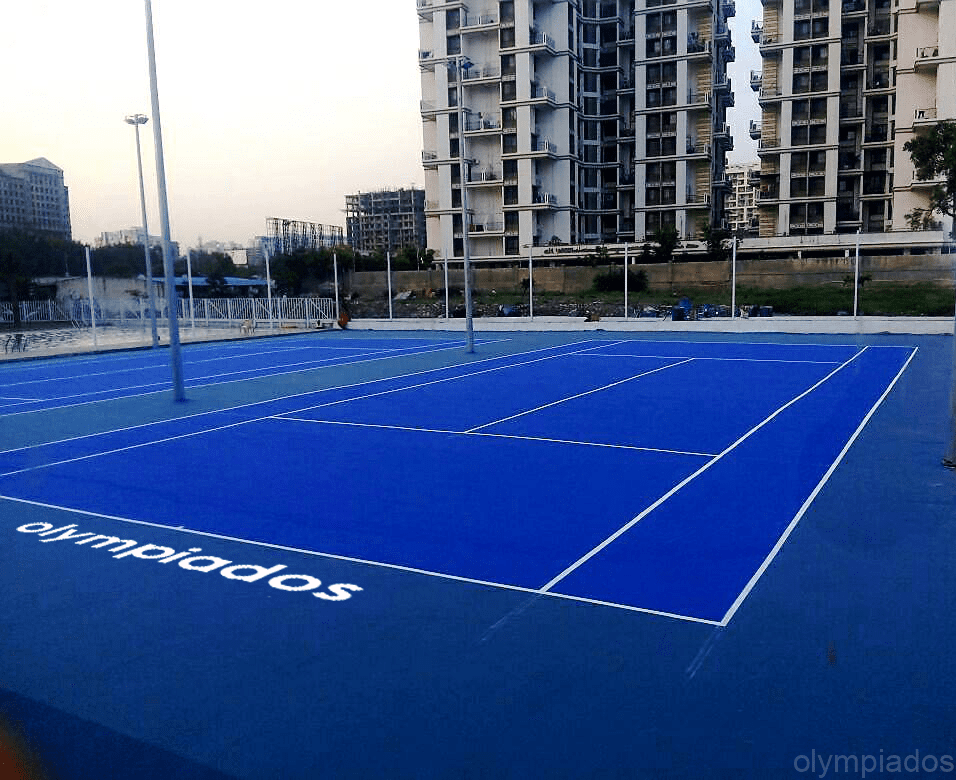
Hard courts with acrylic surfacing are the most widely used tennis court flooring in India. They provide consistent bounce, moderate speed, and relatively low maintenance compared to clay or grass.
Best suited for: Schools, clubs, residential projects, and academies
Why preferred: Balanced cost, durability, and all-weather usability
Synthetic Turf Flooring
Carpet or synthetic courts are typically used for temporary setups or indoor facilities. They offer faster gameplay but are less common in outdoor Indian conditions due to durability limitations.
Best suited for: Indoor or temporary courts