

Introduction:
Tennis court construction is a technically sensitive and capital-intensive process. The quality of planning, material selection, and execution directly impacts playability, durability, and long-term maintenance costs.
Whether you are developing a sports facility, academy, residential project, or private court, understanding the key considerations before construction can help avoid costly errors and ensure consistent performance over time.
This guide outlines the essential aspects of tennis court construction—from design and materials to maintenance.
1. Design Considerations:
Before initiating construction, it is critical to evaluate key design parameters that influence both usability and long-term performance and as per ITF standards.
a. Space and Orientation:
A standard tennis court requires a minimum area of approximately 120 feet by 60 feet, including runoff space. However, beyond dimensions, court orientation plays a crucial role.
Ideally, courts should be aligned in a north-south direction to minimize the impact of sunlight on players. Site-specific factors such as wind direction, surrounding structures, and terrain should also be considered during planning.
b. Surface Type:
The choice of surface significantly affects gameplay, maintenance requirements, and lifecycle cost.
The three primary surface types are:
• Grass
• Clay
• Hard courts (acrylic or asphalt-based)
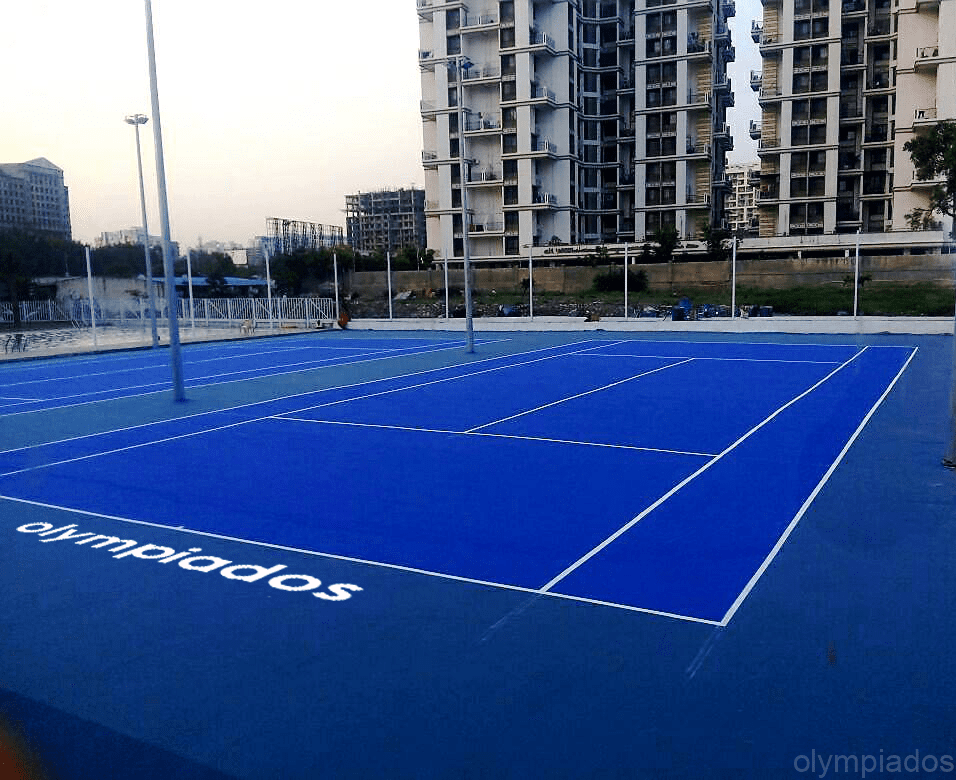
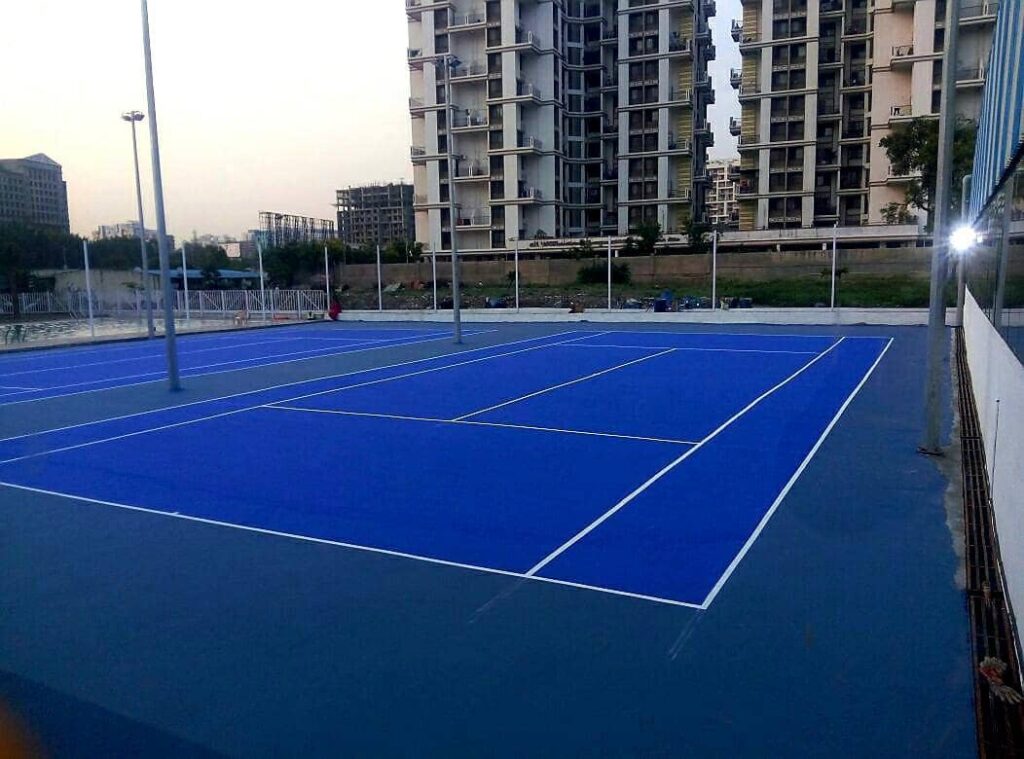
In India, acrylic hard courts are the most widely adopted due to their durability, relatively lower maintenance, and suitability for diverse weather conditions.
Selecting the right surface should be based on usage patterns, user profile, and long-term maintenance capability—not just initial cost.
c. Fencing and Lighting:
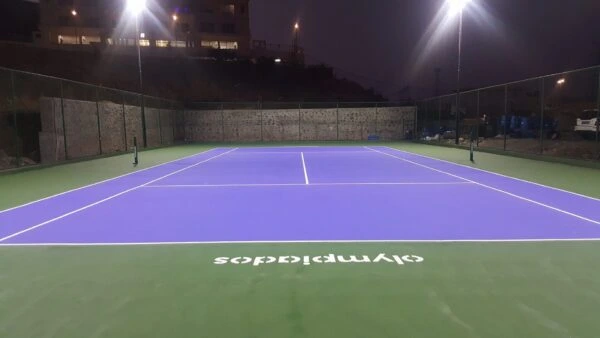
Fencing is essential for safety and containment. Typically, chain-link fencing with a height of 10–12 feet is recommended for standard courts.
Lighting becomes critical for extended usage, especially in commercial or institutional facilities. LED lighting systems are preferred due to their energy efficiency, uniform illumination, and longer lifespan.
Proper placement and lux levels must be ensured to avoid glare and shadow zones.
2. Material Selection:
Material selection directly impacts the structural integrity and performance consistency of the court.
a. Sub-base:
The sub-base is the most critical structural component of a tennis court.
A properly constructed sub-base—typically consisting of compacted layers of crushed stone or gravel—ensures:
• Stability
• Proper drainage
• Resistance to cracking and settlement
Poor sub-base preparation is one of the most common causes of premature court failure, leading to recurring repair costs.
b. Surfacing:
Surfacing materials vary depending on the chosen court type.
• Clay courts require layered crushed material and regular maintenance
• Grass courts require specialized turf systems
• Hard courts typically use acrylic surfacing over an asphalt or concrete base
In most Indian conditions, acrylic systems over asphalt are preferred due to their balance between performance, cost, and maintenance.
c. Markings:
Accurate and high-visibility markings are essential for gameplay.
Specialized sports coatings should be used to ensure:
• Strong adhesion
• Weather resistance
• High contrast for visibility
Even a well-constructed court requires regular maintenance to retain performance and extend its lifespan.
3. Maintenance and Care:
To ensure your tennis court flooring remains in top condition and offers a consistent playing experience, regular maintenance is essential. Here are a few maintenance tips:
a. Cleaning:
Routine cleaning helps prevent dirt accumulation and surface degradation.
• Regular sweeping or blowing removes debris
• Periodic washing helps control algae and dust build-up
For clay courts, additional processes such as rolling and watering are necessary to maintain surface consistency.
b. Repairs:
Minor issues such as cracks or surface irregularities should be addressed promptly.
Delays in repairs can lead to:
• Structural damage
• Increased maintenance costs
Depending on usage and environmental exposure, resurfacing may be required periodically.
c. Net and Post Maintenance:
Nets, posts, and accessories should be inspected regularly to ensure proper tension, alignment, and safety.
Maintaining these elements contributes to both gameplay quality and overall facility standards.
Conclusion:
Tennis court construction is not just a civil activity—it is a specialized process requiring careful alignment between design, materials, and execution quality.
A well-planned and properly executed court delivers consistent performance, minimizes long-term maintenance challenges, and enhances overall user experience.
For any sports infrastructure project, investing time in planning and technical decision-making upfront is critical to achieving long-term success.