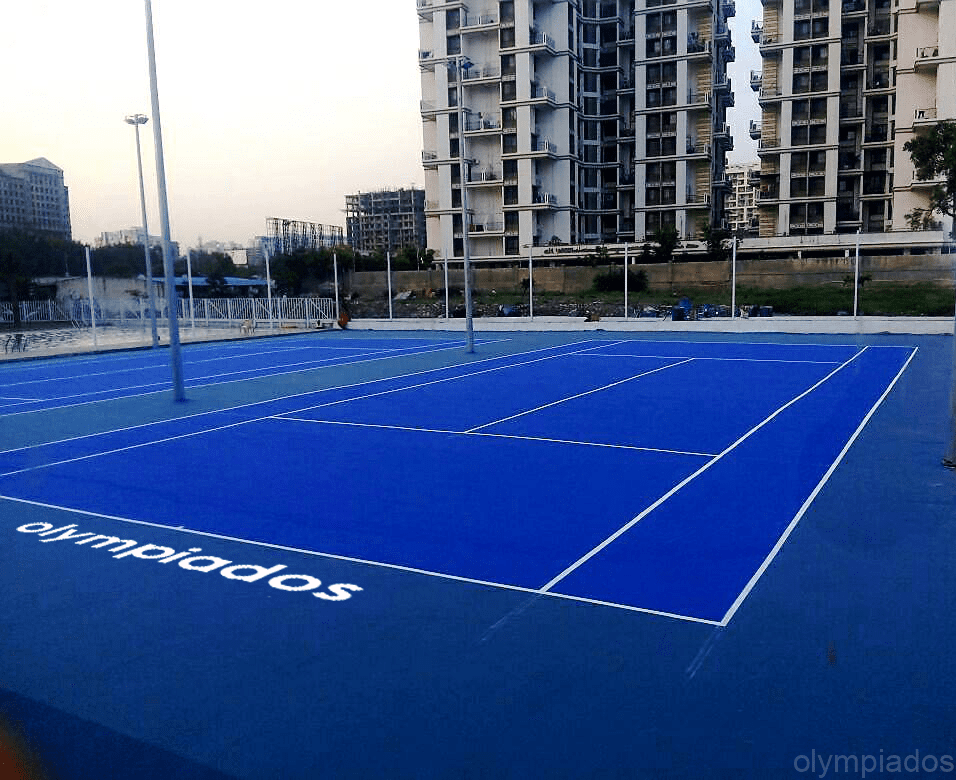



Economic and Social Impact of Sports Infrastructure in India
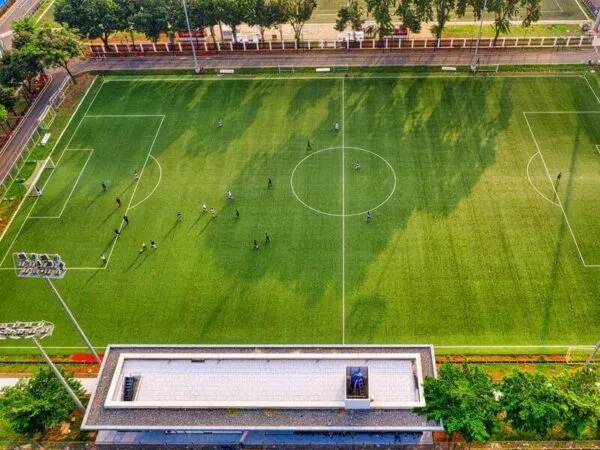
Sports infrastructure in India plays an important part of a sporting ecosystem, but its value extends well beyond the playing field. Well-planned sports facilities can support participation, athlete development, community engagement, employment, local economic activity and sporting events.
However, the impact of sports infrastructure is not determined simply by how much is invested or how many facilities are constructed. The real value of a sports asset depends on whether it is appropriately planned, accessible to its intended users, efficiently operated, properly maintained and utilised over the long term.
For project owners, developers and public authorities, this means that the economic and social value of a sports facility needs to be considered from the planning stage rather than after construction.
Sports Infrastructure in India and Community Participation
Accessible sports facilities can play an important role in increasing participation in both recreational and competitive sport. However, accessibility is not determined by the physical presence of a facility alone.
Location, connectivity, affordability, operating hours, facility mix and programming all influence whether people actually use a sports facility.
Large stadiums can support major competitions and events, but smaller and more flexible facilities can often provide greater day-to-day community access. Badminton centres, football fields, swimming facilities, athletics tracks, community courts and multi-sport facilities can serve different user groups and support regular participation throughout the year.
The objective should therefore not simply be to build larger facilities. It should be to develop the right facilities for the users and the context in which they are located.
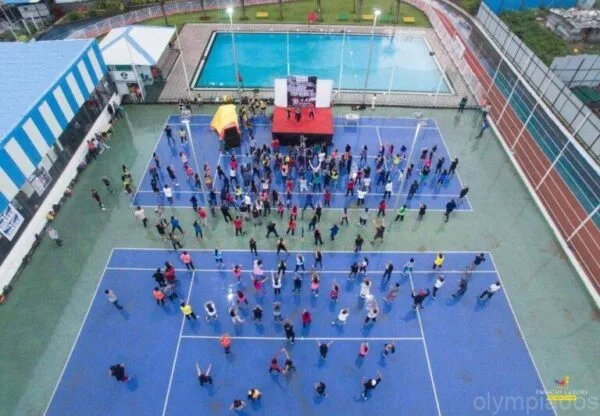
Utilisation Determines the Economic and Social Impact of Sports Infrastructure in India
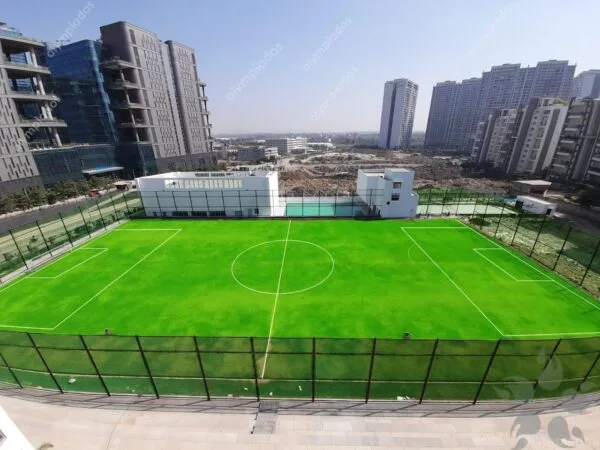
The economic and social impact of a sports infrastructure in India is closely connected to how effectively it is utilised.
A facility that remains underutilised cannot deliver the same value as an asset that has consistent and sustainable usage. Utilisation depends on several factors, including catchment area, accessibility, facility mix, pricing, programming, operating hours, competition and the quality of the user experience.
This makes demand assessment an important part of sports infrastructure planning.
Before significant capital is committed, project owners should understand who the potential users are, what sports they participate in, how frequently they are likely to use the facility, what they are willing to pay, and what alternative facilities are already available.
The number of facilities constructed is therefore not, by itself, a reliable measure of the success of sports infrastructure investment. Actual utilisation and long-term performance provide a much stronger indication of whether the asset is delivering its intended value.
Economic Impact of Sports Infrastructure
The economic contribution of sports infrastructure can occur at several levels, from construction and employment to ongoing facility operations, events and surrounding commercial activity.
Local Economic Activity and Employment
The development of sports facilities creates economic activity during construction through demand for contractors, specialist suppliers, skilled labour and professional services.
Once operational, facilities can create continuing employment across coaching, administration, facility management, maintenance, security, housekeeping, sports programming and other support functions.
The economic activity can also extend beyond the facility itself. Users, spectators, athletes and visitors may generate additional demand for transportation, accommodation, food and beverage, retail and other local services.
Events and Sports Tourism
Well-planned sports facilities can become venues for tournaments, competitions, training camps and other sporting events.
Major events can attract participants and spectators from outside the immediate area, creating additional demand for hotels, restaurants, transportation and other services.
The potential for events and sports tourism should therefore be considered during the planning stage. Facility specifications, spectator capacity, supporting amenities, accessibility and operational capability can all influence the type and scale of events that a venue can accommodate.
Impact on Surrounding Development
Sports infrastructure can also influence the development and attractiveness of its surrounding area.
In residential, institutional, commercial or mixed-use developments, well-planned sports facilities can function as important amenities and activity generators. Their contribution, however, depends on whether the facility is appropriately integrated with the surrounding development and whether it generates meaningful and sustained utilisation.
A sports facility should therefore be considered as part of the wider development ecosystem rather than as an isolated asset. For project owners and developers, the real impact of sports infrastructure is determined long before execution—at the planning stage
Impact on Health, Participation and Athlete Development
The social value of sports infrastructure extends beyond economic activity.
Accessible facilities can provide opportunities for children, young people, adults and older populations to participate in physical activity. Regular access to suitable facilities can support recreational sport, structured training and broader participation.
For athletes, the quality and availability of training infrastructure can directly influence the development pathway. Appropriate playing surfaces, training spaces, strength and conditioning areas, recovery facilities and supporting infrastructure can create better conditions for systematic athlete development.
The impact is therefore not limited to elite competition. A strong sports infrastructure ecosystem needs facilities that support different levels of participation, from community recreation and school sport to academies, high-performance training and competition.
Why Planning Determines the Impact
The economic and social value of sports infrastructure is largely determined before construction begins.
Demand assessment, catchment analysis, facility programming, site selection, technical planning, capital budgeting, operational strategy and lifecycle planning all influence how successfully the asset will perform after completion.
A project developed without understanding its users may result in excess capacity, inadequate supporting facilities or an inappropriate facility mix. Similarly, a facility developed without a realistic operating and maintenance strategy can become expensive to run and difficult to sustain.
This is why sports infrastructure planning needs to consider the complete lifecycle of the asset rather than focusing only on construction.
The objective should be to create a facility that is relevant to its users, technically appropriate, financially viable, operationally sustainable and capable of delivering measurable long-term value.
Conclusion
Sports infrastructure can create significant economic, social and sporting value, but that value is not created simply by constructing a facility.
The impact depends on whether the project responds to genuine demand, is appropriately located and designed, achieves sustainable utilisation, supports its intended users, and can be operated and maintained effectively over its lifecycle.
For project owners, developers and public authorities, sports infrastructure should therefore be viewed as a long-term asset rather than simply a construction project.
The most successful projects begin by defining the purpose of the facility, understanding the market and users, establishing the appropriate facility mix, assessing financial and operational requirements, and planning for long-term performance.
For project owners and developers, the real impact of sports infrastructure is determined long before execution — at the planning stage.