

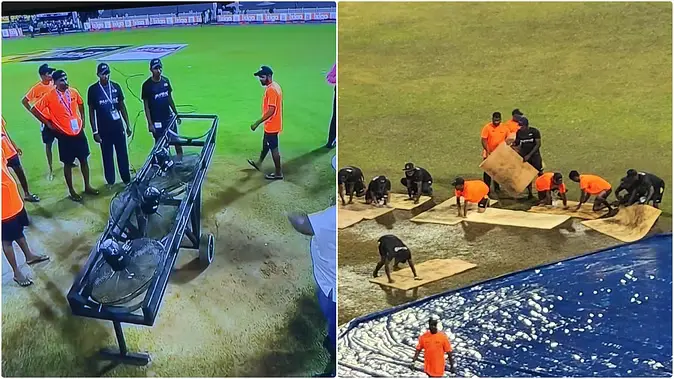
The 2023 Asia Cup hosted by Sri Lanka was an exciting cricket spectacle. The event took place under unpredictable weather conditions. Amidst the intensity of matches and persistent rain problems, a group of unsung heroes emerged to protect the cricket ground—the ground staff of the R. Premadasa Stadium in Colombo. The tournament saw several matches affected by heavy rain, leading to delays and even the rescheduling of games.
Weather-related disruptions are one of the most critical risks in sports facility operations, particularly in cricket and football grounds.
The ability of a playing surface to recover quickly after rainfall is not accidental — it is directly linked to how effectively the drainage system has been planned and executed.
Understanding the significance of effective Drainage system in a Cricket Ground and Football grounds.
From a project planning perspective, drainage is not just a maintenance factor — it is a core design parameter that directly impacts playability, scheduling reliability, and long-term surface health.Drainage is one of the most important issues when managing a sports grounds like Cricket Grounds and Football Grounds. Excessive rainfall, and/or winters with heavy snowfall, often produces excess soil water conditions. Heavy rains will frequently result in runoff because the rainfall rate is greater than the rate at which water can infiltrate the soil. Standing water and/or saturated fields can cause cancellation or postponement of events, increase likelihood for compaction and ruts, and lead to poor overall field health. Efficient soil drainage ensures that water does not collect on the athletic surface.
A well-drained sports surface improves safety and playability, allows turfgrass plants to access necessary nutrients, allows better air exchange, and improves turfgrass recovery potential.
Successful drainage comprises three key components:
Surface drainage: Surface drainage is when water runs off the surface of the field.
internal drainage: Internal drainage refers to water entering and moving through the soil profile
Sub-surface installed drainage systems: Sub- surface installed drainage systems refer to pipe systems installed beneath the field to direct excess water from the rootzone to a drainage outlet.
The construction technology of modern sports facilities , which is of international standards or ICC standards is conditioned by their purpose, so they are distinguished as single-purpose facilities of civil engineering construction (hippodromes, racing tracks, sports grounds, Cricket Pitch) and building construction (sports-recreational centres, school halls, etc.) or multi-purpose (multifunctional) sports facilities.
Effective drainage systems are typically structured across three layers, each addressing a different aspect of water movement:
In sports infrastructure projects, drainage performance is determined at the planning and design stage — not during execution.
Decisions around grading strategy, soil profile, sub-surface systems, and outflow management must be aligned early to avoid recurring operational issues. Poorly planned drainage often leads to ongoing maintenance costs, reduced field availability, and compromised playing conditions.
For facility owners and developers, drainage should be evaluated as a foundational system rather than a secondary feature. Early-stage clarity on design approach and performance expectations is critical to ensuring uninterrupted usage and long-term asset efficiency.
Explore how structured advisory can help identify and mitigate such risks before execution commitments are made.